
SMS Customer Engagement in The Gambia: How to Keep Customers Coming Back
Getting a customer's phone number is the easy part. What happens over the following six months is what decides whether that number is worth anything. A list that receives one useful message a week stays healthy for years. A list that receives four promotions in a fortnight quietly stops reading, and you go on paying to send to people who no longer look.
Most writing on this subject assumes you can hold a conversation over SMS, with customers replying YES to confirm, texting a keyword to enter a contest, answering a poll. In The Gambia that is not how business SMS works, and building a plan around it is the fastest way to be disappointed. It is worth being precise about what the channel here can and cannot do.
The three message types, and the two you actually have
Transactional messages
These carry information the customer is already waiting for: an order confirmation, a delivery notice, a payment receipt, an appointment reminder, a one time code. They get opened, not because they are well written but because the customer is expecting them and they arrive at the moment the information matters.
This is the foundation and most Gambian businesses underuse it badly. A customer who gets a message the moment their payment goes through, and again when their order is ready, has been told twice that you are organised. Neither message sells anything. Both make the next sale easier.
Promotional messages
New stock, a price drop, a closing time change, an offer that ends Friday. This is where most people think SMS begins, and it works, but only in proportion. Promotional messages spend the goodwill that transactional messages build. Send only these and the balance runs out.
Conversational messages, and why they are not on the table
A sender ID is a one way channel. When a message arrives from your business name rather than a number, there is no number for the customer to reply to. A reply goes nowhere. Nobody receives it, and no notification tells you it happened.
So do not write "reply YES to confirm" or "text WIN to enter" on a message sent under a sender ID. The customer will reply, nothing will happen, and they will conclude you ignored them. That is worse than never asking.
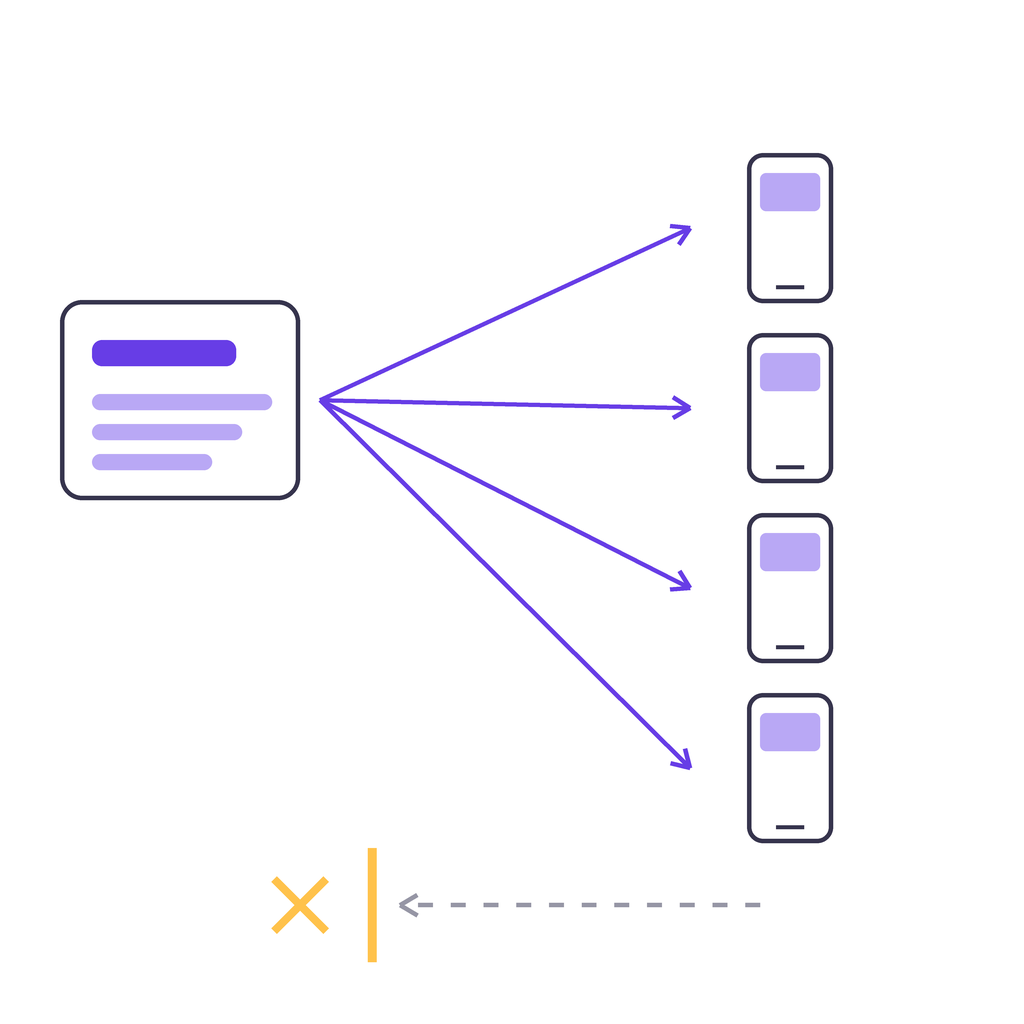
The conversation still happens, just not over SMS. It happens on your own phone number and on WhatsApp, which is where Gambian customers already are. The right pattern is to let SMS carry the message outward, reliably, to everyone including the people with no data that day, and to name a number that a person actually answers when you want a reply. SMS for reach, the phone for the conversation.
What makes a campaign work
Use the customer's name, properly
A message that opens with the recipient's first name reads as though it was meant for them. Save a template with {{ first_name }} in it and the name is filled in per recipient at send time. It costs nothing and it changes the tone of the whole message.
Personalisation is not only the name, though. The more useful version is sending something that is true of that person specifically, which is a question of grouping.
Segment, even crudely
Sending the same message to your whole list is the single most common reason lists go stale. You do not need sophisticated segments. Three or four groups is enough for most businesses: people who bought in the last three months, people who have not bought in a year, people who asked about one particular product line, wholesale versus walk in.
Put contacts into groups as they arrive rather than promising yourself you will sort it out later. A notice about school uniforms sent to everyone teaches most of your list to ignore you. Sent to the parents who bought last September, it is useful.
One thing to do
Every message should ask for exactly one action, and the action should be specific. Come to the Westfield shop before 7pm. Call this number to reserve one. Follow this link to pay. A message offering three possibilities gets none of them acted on.
Links, kept short
A link is often the difference between a message people like and a message people act on. A raw link with a long tail of characters eats into your 160 and looks like something a customer has been warned about. Shorten it, and point it somewhere that works on a phone.
Campaigns worth building first
Rather than inventing a calendar, start with the handful that reliably earn their cost.
- A welcome message. Sent once, straight after someone gives you their number. It is the most read message you will ever send, so use it to say what they will get from you and how often, not to sell them something immediately.
- Order and delivery updates. Confirmed, ready, on its way. Three short messages that remove three phone calls asking where it is.
- Payment confirmations. Especially useful for anything paid remotely, where the customer has no receipt in their hand.
- Appointment reminders. Sent the day before. For clinics, salons and workshops this pays for the whole SMS bill by itself in missed appointments avoided.
- Back in stock. Aimed only at the people who asked about that item. Small list, high response, almost no cost.
- Abandoned checkout. If you sell online, a short message within the hour catches people who got interrupted rather than people who changed their mind. Worth pairing with payments on your own website.
- Loyalty and early access. Telling a small group of regulars about something a day before everyone else costs nothing and is the cheapest loyalty scheme in existence.
- Feedback requests. Sent a day or two after a purchase. Since the customer cannot reply by text, point them at a number to call or a short form to fill in.
Seasonal peaks are worth planning around properly. Trade around Koriteh and Tobaski is concentrated into a short window, and the businesses that do well send two weeks ahead, when people are planning, rather than the day before, when every other message is competing for the same attention.
Best practices that hold here
Permission is enforced by the operators, not a court. There is no Gambian equivalent of the American TCPA setting out exact wording. What there is, is a sender ID that can be suspended on complaint, with no warning letter first. Send to people who knowingly gave you their number, and mark anyone who asks to stop as unsubscribed the same day. Because there is no reply channel, somebody has to do that by hand, so make it a person's job rather than a good intention.
Time it around how people actually live. Money moves at the end of the month when salaries land, and the days just after are when people buy. A promotion on the twenty second reaches people who cannot act on it. Friday afternoons are quiet around prayers. And a promotional message at half past ten at night reads as rude regardless of the offer.
Frequency is the setting people get wrong. Once a week is plenty for most retail. Transactional messages do not count against that, because the customer asked for them by transacting.
Change one thing at a time. Send the same offer to two halves of a group with different wording, or the same message at two different times, and keep whichever won. Comparing your campaign against a published benchmark from another country tells you nothing. Comparing it against your own last one tells you everything.
Reading the results honestly
Three numbers matter, and only one of them is comfortable.
Delivery rate tells you whether your list is real. Failures clustered on a single network point at a routing problem rather than bad numbers.
Response is whatever you asked for, measured where it happens: people through the door, calls received, link clicks, orders placed. SMS will not report this for you, so decide before you send what you are going to count.
Opt out rate is the one that actually matters. It is the only number that tells you the message was wrong, and it is the only one that compounds. A campaign with a good response and an unusually high opt out rate has borrowed from next year to pay for this month.
Where to start
If you send nothing today, start with transactional. Confirmations, reminders and receipts are the messages customers welcome, they are cheap, and they build the standing that makes a promotion work later. Add one promotional send a week once that is running, to a group rather than to everyone.
At GMD 0.90 per message with no monthly fee, a segment of three hundred people costs 270 dalasis to reach. That is small enough to be wrong with, which is exactly what you want from a first campaign.
You can build all of this in Jokoor SMS: contacts and groups, saved templates with variables, campaigns and delivery reports, plus an API if you want your own system to send the transactional messages automatically. If you have not registered a sender ID yet, start there, because it takes three to five business days and everything else reads better underneath your own name. Our guide covers it: how to get an SMS sender ID in The Gambia. To talk it through, call +220 2023700.